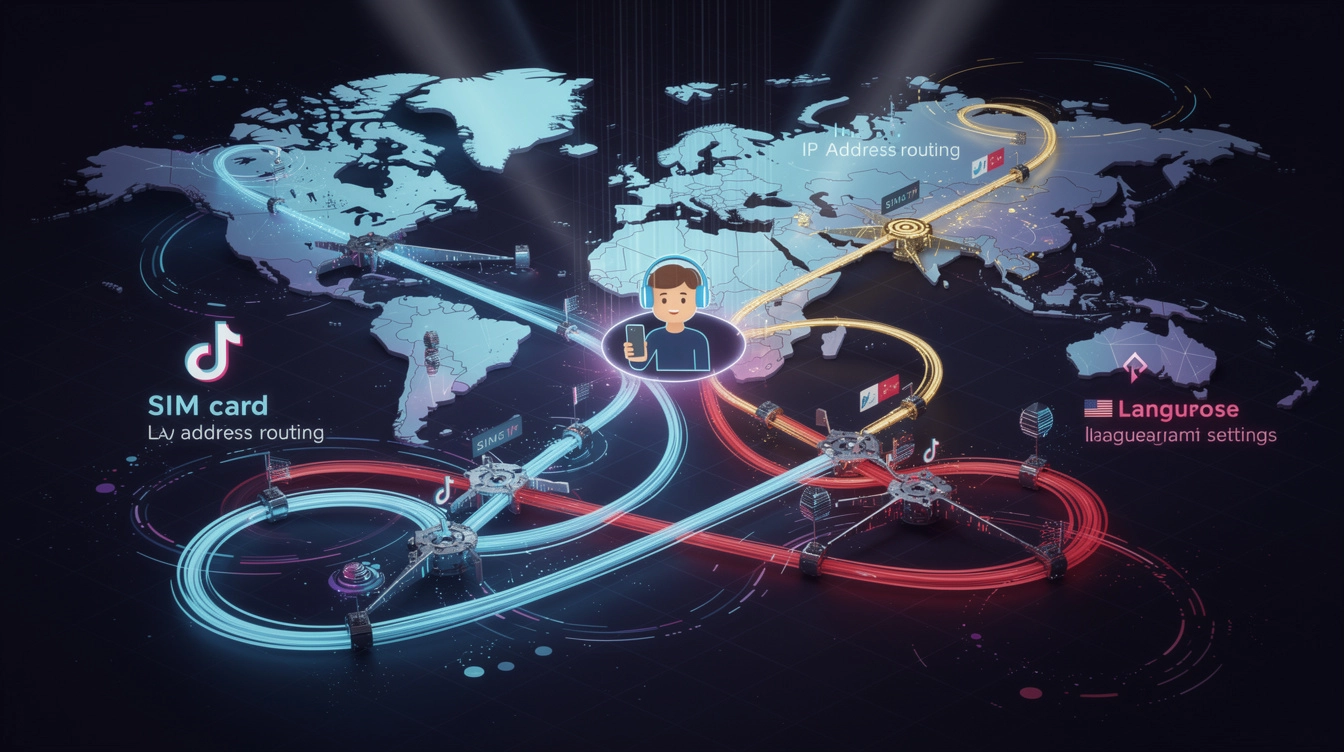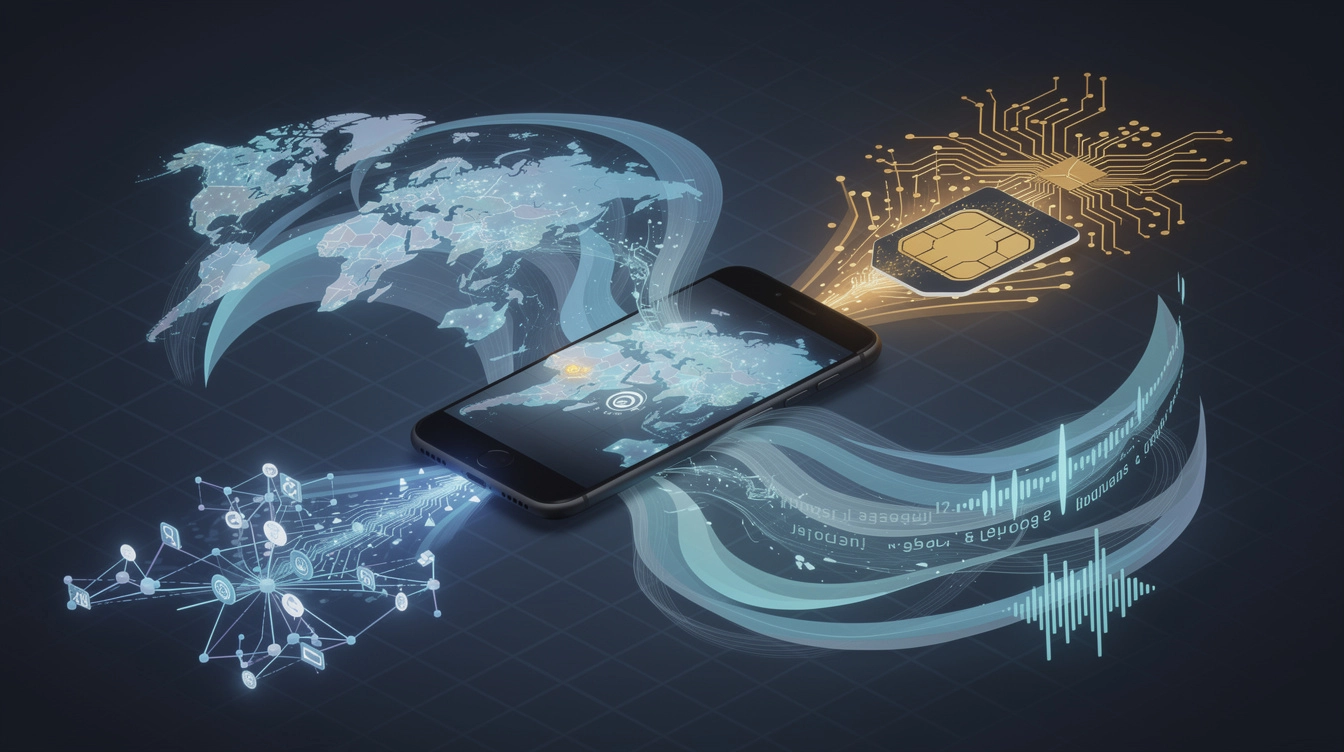
If you're a creator trying to reach US audiences from outside the United States, you need to understand how TikTok figures out where you are. TikTok doesn't rely on a single signal — it uses five different methods to determine your location, and each one affects how your content gets distributed.
Here's every signal TikTok uses, ranked by how much they actually matter for content distribution.
Signal 1: Your IP Address (Most Important)
Your IP address is the strongest signal TikTok uses to determine your location. Every time you open TikTok, the app sees the IP address assigned by your internet provider. If you're in Brazil, you have a Brazilian IP. If you're in Germany, you have a German IP.
TikTok uses this IP to make an immediate decision: show your content to audiences in the same region. This happens before any other signal is even considered. Your IP address determines which "content pool" your videos enter — and that pool determines your initial audience.
This is why changing your IP address is the most effective way to change your audience. A dedicated US IP from VPN To US puts your content into the US distribution pool from the very first view.
Signal 2: SIM Card Mobile Country Code
Your phone's SIM card contains a mobile country code (MCC) that identifies which country the SIM was issued in. TikTok reads this information as a secondary location signal.
A US SIM card tells TikTok your phone was registered in the United States. However, this signal is weaker than your IP address. If your IP says Brazil but your SIM says US, TikTok gives priority to the IP. The SIM card is a supporting signal, not a primary one.
This is why the popular "SIM card trick" produces inconsistent results — it changes a secondary signal while leaving the primary one (your IP) unchanged.
Break out of your local algorithm
Get a dedicated US IP that TikTok and Instagram actually trust. Setup takes 60 seconds.
See Plans from $5/moSignal 3: Device Language and Region Settings
Your phone's language setting and regional preferences give TikTok another data point. If your phone is set to English (US) with a US region, that's a signal pointing toward the United States.
This is the weakest of the location signals. It's easy to change and TikTok knows that, so it's treated as a hint rather than a definitive indicator. Changing your device language to English helps, but it won't override your IP address.
Signal 4: Cell Tower Connections
When your phone connects to cellular networks, it pings nearby cell towers. These towers have known geographic locations. TikTok can access this information on mobile devices to approximate your physical location.
This signal is difficult to fake. Even with a US SIM card and a VPN, your phone still connects to local cell towers. This is one of the reasons multi-signal approaches (SIM + language + VPN) exist — no single method covers every signal.
However, cell tower data primarily serves as a verification signal rather than a distribution signal. TikTok uses it to flag contradictions (like a "US" account connecting from cell towers in Southeast Asia), but it's not the main factor driving content distribution decisions.
Signal 5: Account History
TikTok remembers where your account has been active. If you created your account in Indonesia and have six months of activity from Indonesian IPs, TikTok has a strong baseline for your location.
This means that a brief VPN session won't immediately shift your entire audience. TikTok needs to see consistent behavior from your new location. Creators using VPN To US typically see their audience shift within 1-2 weeks of consistent use — always connecting before opening TikTok, every session, same US IP.
How These Signals Rank
Not all signals carry equal weight. Based on how TikTok's algorithm actually behaves in 2026, here's the hierarchy:
| Signal | Weight | Can You Control It? |
|---|---|---|
| IP address | Highest | Yes — with a VPN |
| SIM card MCC | Medium | Yes — with a US SIM/eSIM |
| Cell towers | Medium (verification) | No — tied to physical location |
| Account history | Medium (builds over time) | Yes — with consistent behavior |
| Device settings | Low | Yes — easy to change |
The takeaway: your IP address is the most important signal and the easiest one to change effectively. A dedicated US IP covers the highest-weight signal, and consistent use builds a matching account history over time.
Looking for the simplest way to reach US audiences? VPN To US gives you a dedicated US IP in 60 seconds. See plans
What This Means for Creators
If you're trying to reach US audiences, focus on the signal that matters most: your IP address. Consumer VPNs change your IP but use shared, blacklisted addresses that TikTok recognizes. VPN To US provides dedicated, low-density US IPs — a maximum of 100 users per server — that TikTok treats as legitimate US connections.
Setup takes 60 seconds:
- Sign up at vpntous.com
- Download the free Outline app
- Paste your access key and connect
- Open TikTok — you're now posting from a US IP
For a deeper look at how these signals feed into TikTok's content distribution pipeline, read our guide on how location affects your For You Page distribution. And for a complete technical breakdown of how TikTok's algorithm works, check out our TikTok algorithm deep dive.