If you're an international creator trying to break into the US market, you've probably noticed something frustrating: your YouTube Shorts go viral, but the views are coming from the wrong country. Understanding YouTube Shorts country targeting is one of the most overlooked challenges international creators face, and it's quietly draining the US audience growth you're working toward.
How YouTube Assigns a 'Home Country' to Your Channel and Content
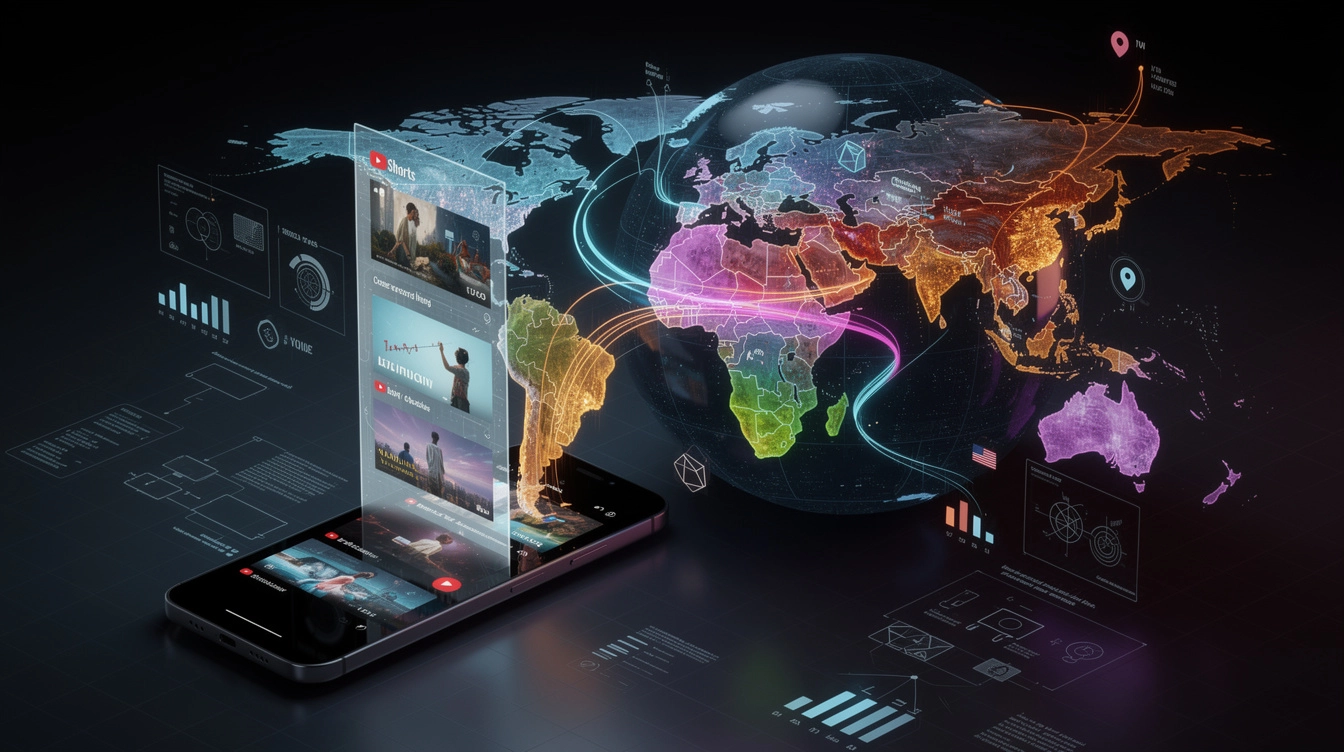
YouTube doesn't just look at your content to decide where to push it. From the moment you create your channel, Google is building a geographic profile based on your account registration location, your billing country, your device's IP address, and the language and region settings tied to your Google account.
This profile becomes your channel's implicit home country. It influences which regional trending pages your content appears on, which advertisers are matched to your videos, and most importantly, which audience pool YouTube seeds your Shorts into during that critical first distribution window.
Many creators assume that making English-language content aimed at Americans is enough. It isn't. If your channel profile says you're in Brazil, YouTube's initial push for your Shorts will lean toward Brazilian viewers, regardless of your content language.
The Role of Upload IP Address in YouTube Shorts Initial Distribution
Here's where things get more technical, and more actionable. When you upload a Short, YouTube logs the IP address of the connection used to publish it. This isn't a conspiracy theory — it's standard practice for any platform trying to understand user behavior and content origin.
That upload IP acts as a real-time geographic signal that can either reinforce or contradict the home country profile already attached to your channel. If you're uploading from Lagos, Jakarta, or Manila, that IP is telling YouTube's system exactly where you are, and the algorithm uses that data point when deciding which regional audience pool to seed your Short into first.
The first few hundred views your Short receives are not random. YouTube is testing engagement with a small, targeted sample before deciding whether to push it wider. If that sample is geographically mismatched with your intended audience, the engagement data looks irrelevant to US viewers, and the algorithm deprioritizes US distribution before your content ever gets a real chance.
Break out of your local algorithm
Get a dedicated US IP that TikTok and Instagram actually trust. Setup takes 60 seconds.
See Plans from $5/moWhy Your Shorts Go Viral in the Wrong Country (Real Creator Examples)
This plays out in predictable ways for international creators doing YouTube Shorts country targeting without a strategy. A fitness creator based in the Philippines uploads a workout Short in English, clearly aimed at a US audience. The first 500 views come from Southeast Asia. Engagement is decent, but YouTube reads the audience as regional. The Short plateaus. US views trickle in days later, if at all, well past the algorithm's optimal amplification window.
A Nigerian tech creator notices their Shorts consistently land on Nigerian trending pages despite covering US product releases and using American slang. Their channel profile, built over years of uploading from a Nigerian IP, has a deeply embedded regional identity that takes real effort to shift.
A creator in Mexico who built a following making Spanish content decides to pivot to English for a US audience. Even though the new content is entirely in English, the algorithm keeps routing Shorts back to their existing Latin American audience base because nothing in the upload signals has changed.
The pattern is the same: the algorithm is not reading your intentions, it's reading your signals.
Looking for the simplest way to reach US audiences? VPN To US gives you a dedicated US IP in 60 seconds. See plans
How to Shift Your Shorts Distribution Toward US Audiences Without Resetting Your Channel
The good news is that YouTube's geographic profile for your channel is not permanent. It updates continuously based on the signals you send. Resetting your channel from scratch is almost never the right move. Instead, you need to start feeding the algorithm different signals consistently over time.
Start with your channel settings. Update your channel country to the United States under your YouTube Studio advanced settings. This alone won't fix everything, but it removes one easy counter-signal.
Next, review your Google account region and billing country settings. Consistency across your entire Google profile matters more than most creators realize.
For your content metadata, use US-specific keywords in your titles, descriptions, and tags. Reference US cultural touchpoints your audience would recognize. These are weak signals on their own, but they compound.
The strongest lever you have is the upload IP address. This is the signal most creators overlook because it requires a deliberate change in workflow. Uploading from a clean US IP tells YouTube's system, in real time, that this content is originating from the US market. When that upload signal aligns with your channel settings and content metadata, you're giving the algorithm a consistent, coherent geographic profile to work with.
This is exactly the problem VPN To US was built to solve for international creators. Rather than routing you through overcrowded, flagged proxy servers that platforms have already learned to distrust, VPN To US provides dedicated, clean, low-density US IPs designed specifically for creators who need their upload signals to register as genuinely US-based. You can get started at vpntous.com and protect your connection before your next upload.
YouTube Shorts country targeting for international creators is not about tricking the algorithm. It's about making sure the signals you send actually reflect the audience you're trying to reach. When your geographic signals are aligned and consistent, the algorithm has no reason to route your content anywhere other than exactly where you want it to go.