If you are an international creator asking why your YouTube channel has no US views, you are not alone. Creators in the Philippines, Nigeria, Brazil, India, and dozens of other countries build polished channels, post consistently, and still watch their analytics show near-zero traffic from the United States. The frustrating part is that most advice online points to thumbnails, titles, and posting schedules — none of which address the root cause for many international creators: the geographic identity YouTube assigned to your channel before a single subscriber ever found you.
How YouTube Assigns Geographic Identity to Your Channel at Upload
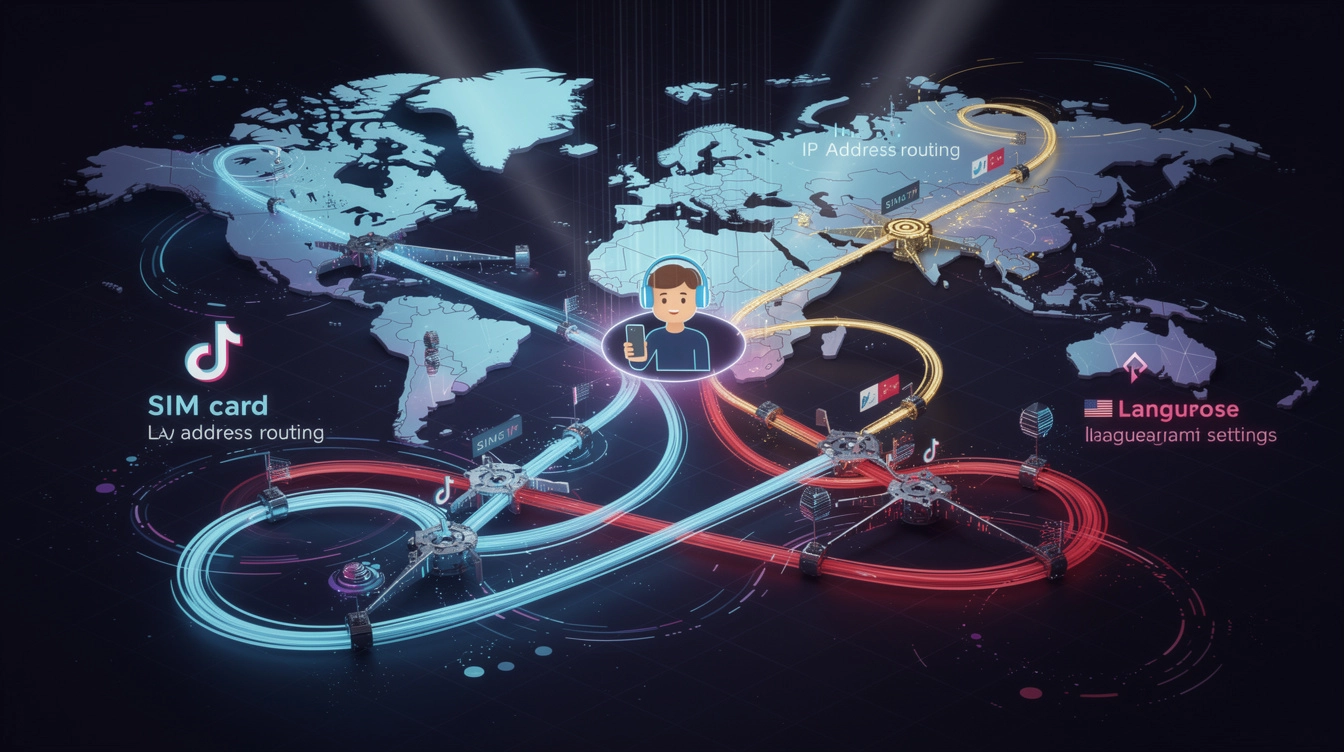
YouTein does not wait until your video goes viral to decide where it belongs. The moment you upload, YouTube reads a cluster of signals to understand who you are and where your content should be surfaced. The most powerful of these signals is your IP address at the time of upload and account activity.
When you log in from Jakarta or Lagos, YouTube's systems register that location. Over time, repeated activity from the same regional IP builds what you can think of as a geographic fingerprint for your channel. This fingerprint influences which regional recommendation queues your videos enter, how YouTube Search surfaces your content by country, and which Browse Features (the homepage and Suggested feed) your videos are eligible for in different markets.
This is not a penalty. YouTube is trying to serve relevant content to relevant audiences. The problem is that if your fingerprint says Southeast Asia or West Africa, the US audience you are trying to reach may simply never see your content in their feed — even if your topic is entirely in English and directly relevant to American viewers.
Reading Your Analytics: The Signals That Reveal a Location Problem
Open YouTube Studio and go to Analytics, then the Audience tab. Look at your top geographies. If your content is in English and aimed at a US audience but your top traffic sources are your home country, neighboring countries, or a scattered mix that excludes the US entirely, you are likely dealing with a location signal issue — not a content quality issue.
Now cross-reference the Traffic Source types report. Pay attention to Browse Features and YouTube Search. If US viewers are not discovering you through either of those, your geographic fingerprint is almost certainly keeping you out of the recommendation pool for that market. Impressions from the US will be low or zero, and click-through rate becomes irrelevant because the impressions are never generated in the first place.
A useful comparison: create a test video specifically optimized for a US search term. If that video ranks in your home country but does not appear at all in US search results for the same term, you have confirmation that the problem lives at the infrastructure level, not the content level.
Break out of your local algorithm
Get a dedicated US IP that TikTok and Instagram actually trust. Setup takes 60 seconds.
Why Fixing Your Title, Tags, and Posting Time Won't Solve a Location Signal Issue for International Creators
This is where a lot of international creators waste months. They rewrite titles using American English, stuff tags with US-centric keywords, and shift their upload schedule to EST prime time. The analytics barely move.
That is because YouTube's algorithm does not re-evaluate your geographic fingerprint based on metadata changes. Tags and titles influence what your video is about. They do not override where YouTube believes your channel operates from. Think of it like putting an American address on a package that is being shipped from overseas — customs still knows where it originated.
Posting time optimization is similarly limited. Yes, posting when your target audience is active helps with early engagement velocity. But if your video is not entering the US recommendation pool at all, the timing of your upload does not matter. You are optimizing delivery for an audience that the platform is not routing to your content in the first place.
The fix has to happen at the signal layer — the IP address and account activity that YouTube reads before any of your metadata even enters the equation.
How International Creators Use Dedicated US IPs to Start Appearing in US Search and Browse Results
The practical solution that has worked for many international creators is establishing consistent US-based activity signals. This means uploading, logging into YouTube Studio, and managing your channel through a US IP address — specifically a clean, dedicated one that is not shared with thousands of other users.
This matters more than most people realize. Generic VPN services route traffic through shared datacenter IPs that are heavily flagged by platforms. YouTube and other platforms maintain lists of known proxy and VPN IP ranges. If you upload through one of those flagged IPs, you may actually make your location signal problem worse, triggering spam or bot filters rather than building a credible US presence.
This is exactly the problem that VPN To US was built to solve. It provides dedicated US IP addresses with low-density usage — meaning you are not sharing your IP with hundreds of other creators. The IPs are clean, which means they are not flagged in the blocklists that platforms check. When you upload and manage your channel through a connection like this, you are building consistent, credible US location signals over time.
If you are ready to stop guessing and start sending the right signals, you can get started at vpntous.com and protect your connection with an IP that actually works for your channel's growth.
Looking for the simplest way to reach US audiences? VPN To US gives you a dedicated US IP in 60 seconds.
The Takeaway
If you have been wondering why your YouTube channel has no US views despite strong content and consistent posting, the answer is probably not your thumbnail. It is the geographic fingerprint baked into your channel from day one of uploading on a non-US IP. International creators who understand this shift their focus from surface-level optimization to infrastructure — and that is when the analytics finally start to move.